
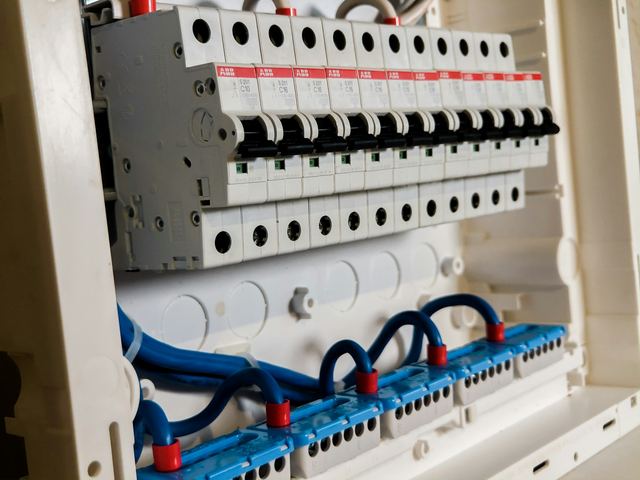
Signs your switchboard is due
The clearest sign is rewireable fuses, the ceramic holders with fuse wire inside. The next is no RCDs at all. An RCD (residual current device) is the switch with a test button that cuts the power fast if current leaks to earth, which is what happens when electricity finds a path through a person.
The other signs are about what the house asks of the board now. Breakers that drop out when the heater and the kettle run together. No spare space when you want a heat pump, an induction cooktop or an EV charger. A renovation that adds rooms. WorkSafe says every new circuit that starts at the switchboard and supplies lighting or power points in a home must have RCD protection, so adding circuits to an old board often means changing the board too.
Burn marks, a strange smell or crackling at the board? Leave it alone
Electricity Networks Aotearoa (ENA) says that if there are burn marks, strange smells or a crackling sound at your switchboard, don't touch it and contact your local lines company straight away. If there's smoke or fire, or someone needs medical help, call 111. Fuses that have simply blown are a job for an electrician.
What the electrician changes, and why it's high-risk work
Most upgrades swap fuses for circuit breakers, add RCDs to the lighting and power point circuits, and leave room for what's coming next. The electrician tests everything before the power goes back on.
The EWRB sorts prescribed electrical work into three risk levels: low-risk, general and high-risk. Installing a higher-capacity switchboard is an alteration classed as high-risk work, so it must be inspected. Your electrician is responsible for arranging a licensed electrical inspector, who checks the work independently and issues a Record of Inspection (RoI).
The job isn't legally complete until both the Certificate of Compliance (CoC) and the RoI have been issued, and you also get an Electrical Safety Certificate (ESC). The RoI is attached to the CoC and recorded on WorkSafe's high-risk database, so there's a record beyond the paper in your drawer.
When the meter or your supply is involved
Your lines company owns the network up to your property boundary. Your retailer is the company you pay for your power. If a bigger load means changing your existing connection, that goes through the lines company, and a meter goes through your retailer.
Each lines company runs this its own way. On Unison's network, for example, you apply for a change to your supply together with your electrician, and your electrician arranges the inspection and a certified livening agent. If your plans include a brand new connection in Vector's area, Vector says new connections work submitted from 16 October 2026 is likely to be scheduled in 2027, so start that conversation early.
Do the new wiring rules mean you have to upgrade?
No. The Government has replaced the wiring rules cited in the Electricity (Safety) Regulations with AS/NZS 3000:2018, and WorkSafe says electrical workers don't have to comply with the amended regulations until 12 November 2026.
WorkSafe also says existing installations can keep being used and repaired as long as they aren't unsafe, with no time limit. A new standard on its own isn't a reason to replace a board that's safe. The signs above are.
What you can do, and what's licensed work
You can
- Know where your main switch is, so you can turn the power off quickly if you ever need to.
- Press the test button on each RCD now and then to check it trips.
- Note which breaker drops out and what was running at the time.
Leave to a licensed electrician
- Anything inside the switchboard or meter board: fuses, breakers, RCDs and the main switch.
- A new or higher-capacity board, new circuits and extra RCDs.
- Checking whether your supply can carry a heat pump, an EV charger or a new cooktop.
- Arranging the licensed electrical inspector when the work is high-risk.
What a good written quote covers
- Which circuits get RCDs, and how many there will be.
- Whether the job is high-risk work, and that the inspection is included in the plan.
- Whether the lines company or your retailer has to be involved, and who arranges it.
- Spare space for anything you've said is coming, like a heat pump or an EV charger.
- Roughly how long the power will be off, so you can plan around the fridge and work.
- The certificates you'll receive (an ESC and a CoC, plus a Record of Inspection for high-risk work) and when to expect them.
- The electrician's name and registration number, so you can look them up on the public register.
Why the specialist matters here
Plenty of electricians can replace a board. The one you want does switchboard work every week, sizes the board for the loads you're adding, and treats the inspection as part of the job rather than an afterthought.
If an EV charger is on the way, say so in the first conversation. WorkSafe's January 2026 guidance says a home charger's circuit should be protected by a Type B RCD and come from a MEN switchboard, so the board and the charger are best planned together.
Before work starts, ask to see the electrician's licence ID. It shows their photo, registration class and number, and expiry date, and a digital licence has a QR code that opens their profile on the public register.

What we'd do
If your board has old fuses or no RCDs, we'd have it looked at before adding a heat pump, a charger or a new circuit, not after something trips or smells hot. Tell the electrician everything you're planning for the next few years, ask up front whether the work is high-risk and who the inspector will be, and keep your CoC, ESC and Record of Inspection together with the house papers.
Want a specialist to sort it?
Tell us the job and your postcode. We match the licence-checked local electrician who does this kind of work, and they call you. No ring-around, and your number goes to them alone.