
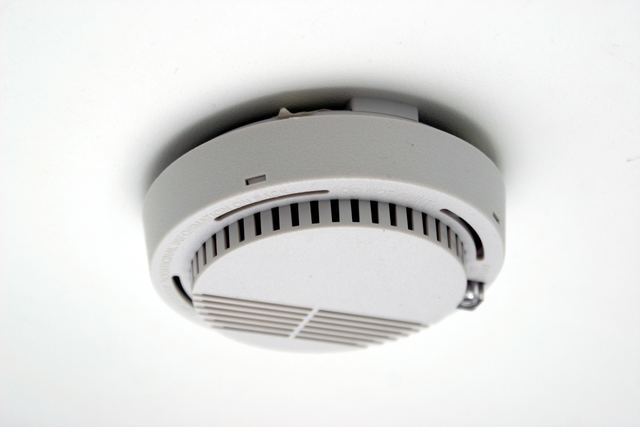
If an alarm sounds and you can smell smoke
Get everyone out, shut doors behind you if you can, and call 111 once you're outside. Don't go back in for anything. A single chirp every minute or so is a low battery or an alarm at the end of its life, not a fire: why a smoke alarm beeps covers what to do.
Which kind of smoke alarm?
Long-life photoelectric alarms run on a sealed battery and go up with a couple of screws. Tenancy Services accepts them in rentals when the battery lasts at least 8 years.
Hard-wired alarms run off the house's power, with a battery to back them up. They suit renovations, when the ceilings are open anyway, and they're accepted in rentals too.
Interconnected alarms talk to each other by wire or by radio, so smoke in one room sets off every alarm in the house. The Building Code's current acceptable solution for fire safety, C/AS1, names interconnected alarms meeting NZS 4514:2021 as the minimum system for a new household unit.
Where the alarms go
Fire and Emergency New Zealand's advice is a long-life photoelectric alarm in every bedroom, hallway and living area. That's the layout we'd use in any home you own.
Rentals have a legal minimum: an alarm in each room where someone sleeps, or within 3 metres of each bedroom door, and at least one on every level of a multi-level home. Tenancy Services counts a split-level home as multi-level, and a self-contained sleep-out or caravan in a rental needs its own working alarm.
Kitchens and bathrooms cause most false alarms, from toast and steam, so a good installer keeps alarms back from them while still covering the hallway outside.
Rentals, your own home and new builds follow different guidance
| A rental | A home you own | A new build | |
|---|---|---|---|
| Whose rule or advice | Tenancy Services (the law for rentals) | Fire and Emergency New Zealand's recommendation | The Building Code acceptable solution C/AS1 |
| What to fit | Photoelectric with a battery life of at least 8 years, or hard-wired | Long-life photoelectric | At least a Type 1 domestic smoke alarm system complying with NZS 4514 |
| Who keeps it working | The landlord, with tenants changing batteries in older replaceable-battery alarms | You, testing each alarm monthly | The owner, once the home is finished |
Rentals: who's responsible for what
The landlord's side is to have the alarms working when each tenancy starts, keep them that way, and look after a hard-wired system the way its maker specifies. The tenant's side is to leave the alarms alone, swap flat batteries in older replaceable-battery alarms, and let the landlord know when something's wrong.
Tenancy Services says landlords who don't meet their smoke alarm obligations can face penalties of up to $7,200, and tenants up to $4,000. Alarms that still work and haven't passed their expiry date can stay until they expire or stop working. The smoke alarm rules page has the detail.
Who fits hard-wired and interconnected alarms
We haven't found an official page that spells out who may wire in a smoke alarm, so we won't pretend to know. What we can tell you is that Fire and Emergency New Zealand points people to a licensed electrician for interconnected alarms, and that's where we'd go for any alarm connected to the house's wiring.
A specialist who fits alarms often will pick ceiling spots away from vents and kitchens, use alarms that meet the right standard, and leave you a note of what went in and when, which is exactly what a landlord needs for the tenancy file.
What you can do, and what we'd leave to an electrician
You can
- Press the test button on each alarm once a month, as Fire and Emergency New Zealand advises.
- Change the battery in older alarms that take one, and replace the whole alarm at its expiry date.
- Put up battery-only photoelectric alarms in a home you own, following the maker's instructions.
- Write the install date on each alarm so you know when it's due.
Leave to a licensed electrician
- Hard-wired alarms, which connect to the house's circuits.
- Wired interconnection between alarms.
- Adding or moving a wired alarm during a renovation.
- Finding out why a hard-wired set keeps false-alarming.

Our take
In a home you own, we'd fit long-life photoelectric alarms in every bedroom, hallway and living area now, then move to hard-wired interconnected alarms the next time the ceilings are open for a renovation. In a rental, we'd check every alarm's date before each new tenancy and replace any with no date or an unknown age, because Tenancy Services' guide says that's the way to be certain.
Want a specialist to sort it?
Tell us the job and your postcode. We match the licence-checked local electrician who does this kind of work, and they call you. No ring-around, and your number goes to them alone.