
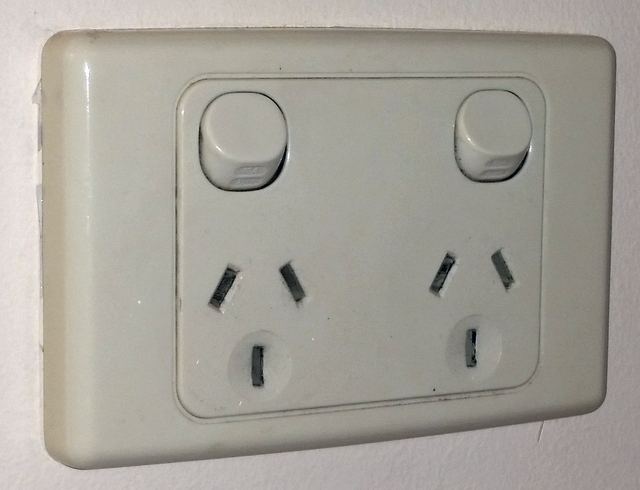
Hot, scorched or sparking power point? Stop using it
If you can unplug what's in it without touching anything scorched, do, and don't use that outlet again until an electrician has looked at it. Brown marks, a melting smell, crackling or a plug that's hot to the touch point to a loose or overloaded connection. Smoke or flames: get out and call 111. If the smell or crackling is coming from the switchboard, leave it alone and contact your lines company straight away.
Signs you've outgrown your power points
- Multiboxes plugged into other multiboxes.
- Extension leads running under rugs or through doorways.
- Plugs that drop out, or an outlet that's loose in the wall.
- Single outlets where you need two, like beside the bed or behind the TV.
- An outlet that's cracked, discoloured or warm.
- Heaters or dryers that need a lead to reach anything.
Where extra power points pay off
The kitchen bench, the home office, beside the bed, behind the TV, the garage and the laundry are where most houses run short. Plenty of older homes were wired for a radio and a kettle, not phones, laptops, screens and appliances on every wall.
Doubles take about the same work as singles, so ask for doubles wherever there's any doubt. Outlets with USB ports are handy beside beds and desks, though a good plug-in charger does the same job.
Outside, you need a fitting made for the weather. The Electrical Workers Registration Board (EWRB) recommends homeowners don't replace fittings in outside areas at all, so outdoor outlets are always one for the electrician.
What the electrician checks first
Before adding outlets, a good electrician looks at the circuit they'll come off: what's already on it, how old the cable is, and whether an RCD protects it. An RCD is the device with a test button that switches the circuit off fast if current leaks.
WorkSafe says new circuits that start at the switchboard and supply power points in a home must have RCD protection. Adding outlets to an old circuit may work fine, or it may be the moment to run a new one. It depends on what that circuit already carries, and the electrician should explain their choice.
The certificate, and when to expect it
Replacing a power point is low-risk work, so the electrician must give you an Electrical Safety Certificate (ESC). Adding outlets or a new circuit is general work, which comes with a Certificate of Compliance (CoC) and an ESC. Power point work isn't high-risk unless it comes with mains work or a higher-capacity switchboard.
The EWRB says electrical workers must issue certification as soon as possible after the work. If it hasn't arrived, ask for it, and keep it with the house papers.
What you can do, and where it stops
You can
- Spread heavy loads like heaters and dryers so they don't share one outlet.
- Bin damaged leads and multiboxes rather than taping them up.
- Press the test button on your RCDs now and then to check they trip.
- In a home you own and live in, the law lets a homeowner replace an existing power point, unpaid and with the circuit fully disconnected. It's narrow, it's never allowed in a rental, and we'd still call an electrician.
Leave to a licensed electrician
- New power points, and moving existing ones.
- Outdoor, bathroom and laundry outlets.
- New circuits, and their RCDs at the switchboard.
- Any outlet that's scorched, loose or hot.
What a good quote spells out
- Where each new outlet goes, and whether it's a single or a double.
- Which circuit each one comes off, or whether a new circuit is needed.
- The RCD protection for any new circuit.
- Weatherproof fittings for anything outside.
- Who patches and paints if walls are cut.
- An ESC for every job, and a CoC for new or extended wiring.

If we were adding outlets
If you're living on extension leads, we'd stop buying multiboxes and get outlets put where you actually use power, in doubles. We'd fix any scorched or loose outlet first, then plan the rest in one visit so the electrician can look at the circuits as a whole.
Want a specialist to sort it?
Tell us the job and your postcode. We match the licence-checked local electrician who does this kind of work, and they call you. No ring-around, and your number goes to them alone.