
Burning, scorching or a shock? Leave the switch down
Leave the tripped switch off. If there's smoke or fire, or someone's been hurt, call 111. Electricity Networks Aotearoa (ENA) says that if you see burn marks, notice a strange smell or hear crackling at your switchboard, don't touch it and contact your local lines company straight away. Anything else that smells hot stays off until an electrician has checked it.
First, which switch dropped?
Look at your switchboard and find the switch that's down. If it has a small test button, it's an RCD (residual current device). An RCD watches for current leaking to earth, which is what happens when electricity finds a path through water, damaged insulation or a person, and cuts the power in a fraction of a second.
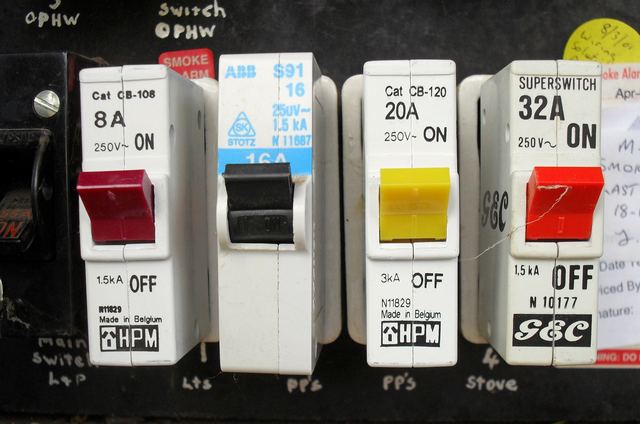
If it has no test button, it's a circuit breaker. A breaker trips when a circuit carries more load than it's rated for, or when there's a short circuit.
Some older boards still have ceramic fuses instead. ENA's advice is that if the fuses at your switchboard have blown, call an electrician.
The unplug test
Unplug everything on that circuit
Pull the plugs out of every power point the dead circuit feeds, not just the switch at the wall. Don't forget the fridge, the heated towel rail on a plug, and chargers.
Reset the switch once
Push it firmly back up. If it won't stay up with nothing plugged in, stop here. That points to the wiring or a fixed appliance, and it's a job for an electrician.
Plug things back in, one at a time
Turn each one on and give it a minute before moving to the next. Start with the things you use most.
Note the one that sets it off
If the switch drops as one particular appliance goes on, you've probably found your culprit. Stop using it until it's been repaired or replaced.
If nothing sets it off
Tripping that comes and goes with no pattern, or only at night or in the rain, needs proper fault finding. Write down when it happens and what was running, and give that list to the electrician.
The usual causes, roughly in order
A faulty appliance. Kettles, heaters, washing machines, dryers, old fridges and anything with a heating element are common offenders, especially as they age. Water and electricity don't mix, so anything with a pump or a heating element is a good first suspect.
Too much on one circuit. A heater, a kettle and a dryer on the same circuit can add up to more than a breaker allows. If it only happens in winter when everything's on, spreading the load may solve it.
Water. Outdoor power points, garden lights and a leak in the ceiling above a light fitting can all trip an RCD after rain.
Damaged cable. A nail or screw through a wall, rodents in the ceiling, or old cable that's cracking with age.
A worn RCD or breaker. It happens, but it's lower on the list. An electrician can test it rather than guess.
Why newer homes can seem to trip more
It's not your imagination. WorkSafe says every new circuit that starts at the switchboard and supplies lighting or power points in a home must have RCD protection, and WorkSafe's January 2026 EV guidance notes the wiring rules require an RCD for new final subcircuits in homes.
An old board with no RCDs won't trip when a faulty heater leaks current, but that's a missing safety net, not a sign everything's fine. If your RCDs trip now and then, they're catching problems an older board would ignore.
Tripping after rain or a flood
If tripping starts after heavy rain, check for anything outdoors that's been soaked: power points on decks, garden lighting, a spa. Leave the circuit off and let an electrician find where the water's getting in.
Don't switch anything back on that has been under water. Appliances, power points and switchboards that have been flooded need checking by a licensed electrician before they're used again.
What the electrician does
An electrician who does fault finding will test each circuit, check the RCDs actually trip when they should, and track the fault to an appliance, a fitting or a length of cable. They'll explain what they found before they fix it.
If the answer is a new RCD or breaker, that's low-risk prescribed electrical work and comes with an Electrical Safety Certificate (ESC). If the board itself is old and full, they may suggest a switchboard upgrade, which is bigger work with more paperwork.
What you can safely do, and what's licensed work
You can
- Reset a tripped RCD or breaker once, with the circuit unplugged.
- Do the unplug test and stop using the appliance that sets it off.
- Press each RCD's test button now and then to make sure it trips.
- Keep a note of when the tripping happens and what was running.
Leave to a licensed electrician
- Anything inside the switchboard, including replacing an RCD or breaker.
- Blown fuses on an older board.
- Finding damaged cable, water in a fitting or a fault in a hard-wired appliance like an oven.
- Checking anything that's been in a flood before it's used again.

What we'd do first
We'd do the unplug test once, properly, before calling anyone. If it finds a faulty appliance, that's the problem solved. If it doesn't, we'd stop resetting the switch and book an electrician who does fault finding every week, and hand them the notes on when it trips. A switch that keeps dropping is telling you something.
Want a specialist to sort it?
Tell us the job and your postcode. We match the licence-checked local electrician who does this kind of work, and they call you. No ring-around, and your number goes to them alone.