
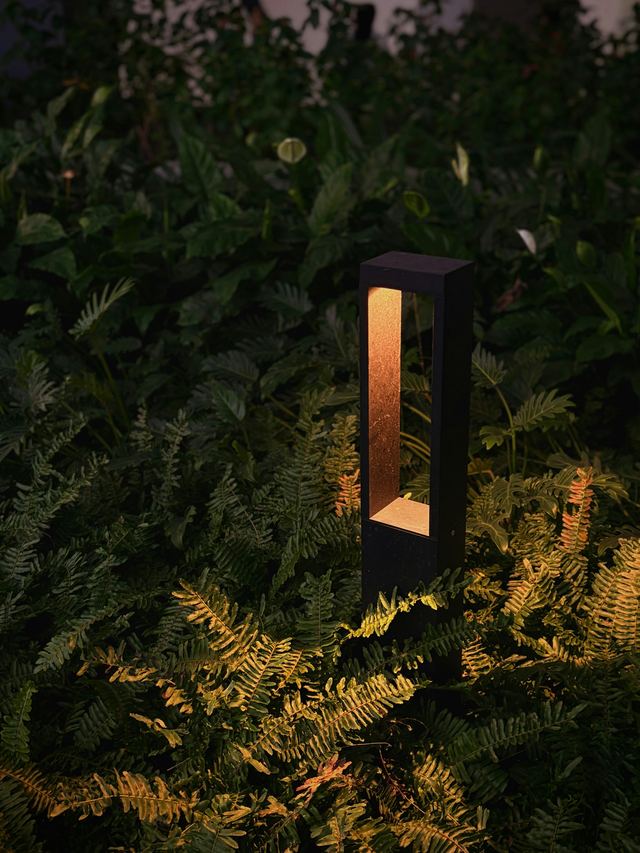
Plug-in kit or hard-wired?
A plug-in garden kit has a transformer that plugs into a weatherproof outdoor outlet and steps mains power down to a much lower voltage for the lights. If a spade nicks one of its cables, the danger is far smaller than with mains cable, which is why these kits are sold for people to set out themselves.
Hard-wired lights are connected to your home's wiring: wall lights by the door, sensor floodlights over the drive, deck lights, and path lights on a switch inside. They need fittings rated for outdoor use, cable protected along its route, and a licensed electrical worker to install them.
Protecting cable in the garden
Digging is the biggest threat to outdoor cable. Cable under a garden bed or lawn has to be buried or protected so a spade or post-hole borer won't find it, and its route should be written down so the next person digging knows where it runs.
Ask the electrician to mark the route on a sketch, or take photos, before the trench is filled. It takes a few minutes on the day and saves a lot of guessing later.
Ponds, fountains and pools
The Electrical Workers Registration Board (EWRB) says homeowner wiring isn't permitted on swimming pool, spa pool, fountain or water feature installations, and the homeowner code NZECP 51 doesn't cover them either. Wiring for a pond pump, a fountain or pool lighting belongs with an electrician, however handy you are.
A plug-in pond pump still wants a proper weatherproof outdoor outlet, ideally RCD-protected, rather than an extension lead snaking across the lawn.
Switching, sensors and timers
Decide how the lights will come on before any cable goes in: a switch by the back door, a motion sensor, a timer, or a smart switch you control from your phone. A sensor light on the driveway and a timer on the garden lights is a common mix.
If the outdoor lights are on a new circuit from the switchboard, WorkSafe says it must have RCD protection. Outside is where that protection earns its keep, because water finds its way into things.
Hard-wired outdoor lighting means new or extended wiring, which is general work: expect a Certificate of Compliance and an Electrical Safety Certificate when it's done.
What you can do outside, and what's licensed
You can
- Set out plug-in low-voltage garden kits, following their instructions.
- Decide where the lights go and how you want them switched.
- Find and mark irrigation pipes and any cable you know about before anyone trenches.
- Keep the flaps on outdoor outlets shut when nothing's plugged in.
Leave to a licensed electrician
- Any hard-wired light outside, including sensor and security lights.
- Outdoor outlets for a transformer, pump or patio heater.
- Cable runs under lawns, paths and garden beds.
- Anything at a pool, spa, pond or water feature.

Our pick for most gardens
We'd have one weatherproof, RCD-protected outdoor outlet put where the garden kits and a pond pump can reach it, and have the electrician hard-wire only the lights you want on a switch: the door, the path and a sensor on the drive. Then we'd ask for the cable route on paper and keep it with the house documents.
Want a specialist to sort it?
Tell us the job and your postcode. We match the licence-checked local electrician who does this kind of work, and they call you. No ring-around, and your number goes to them alone.