
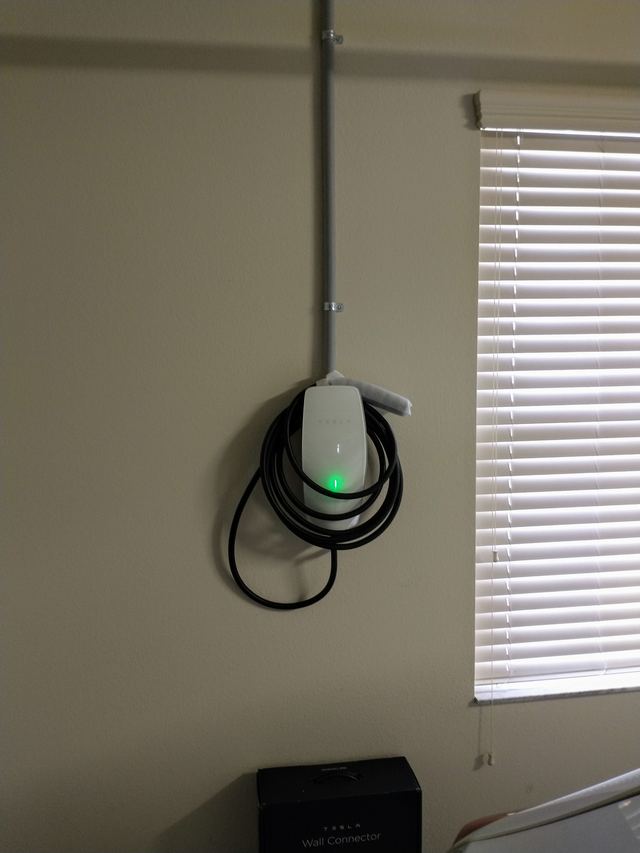
How the install usually runs
A look at the board and supply
The electrician checks there's room on the switchboard, that it's a MEN board (WorkSafe wants charger circuits to come from one), and how much headroom your supply has. A 32 A charger is allowed in a home once the maximum demand has been assessed.
Plan the cable run
From the board to the parking spot: through the ceiling, under the floor or along the outside of the house. The route decides most of the work on the day.
Mount it and set the current
The unit goes on the wall, is wired on its own circuit, and is set to a current that suits the circuit and your supply. Ask which setting they chose and why.
Test, then paperwork
The circuit and charger are tested before handover. A new circuit is general work, so you get a Certificate of Compliance and an Electrical Safety Certificate.
The RCD question for this charger
WorkSafe's guidance wants an EV charger circuit protected by a Type B RCD, or by an RDC-DD paired with a Type A RCD. Its January 2026 addendum also says a charger with a Type B RCD built in can be used without another one protecting the circuit.
So the question for your installer is what this particular model has inside, and what they'll fit at the board as a result. Get the answer on the quote. We don't print Tesla's specifications here, because we only publish what we can source, so go through the model's manual with your installer.
Sharing power with the house
A charger running flat out alongside the oven, the heat pump and the hot water cylinder can push an ordinary supply to its limit. WorkSafe recommends some form of load management with a 32 A charger. Ask whether your installer will set it up, and whether it needs any extra hardware.
If you've got two EVs, or might soon, say so now. Before work starts, ask your electrician to check with your lines company whether anything about your connection needs to change.
Your part, and the electrician's
You can
- Pick the parking spot and note which side the charge port is on.
- If you'll use the charger's app features, check the garage or driveway gets a usable Wi-Fi signal.
- Have the model details and the manual ready for the installer.
Leave to a licensed electrician
- Mounting and wiring the charger on its own circuit. The EWRB says EV charging is excluded from homeowner work, even in a home you own and live in.
- The RCD and breaker at the switchboard.
- Setting the charger's current to suit the circuit.
- Any change to your supply, through the lines company.
We're not connected with Tesla
Sparky Next Door has no link with Tesla and doesn't sell chargers. We match you with one licence-checked local electrician who installs EV chargers regularly, and they'll quote the job and do the work.

What we'd ask the installer
We'd book the electrician's look before buying the unit, then ask for the current setting, the RCD arrangement and the load management to be written into the quote. Once it's in, we'd file the CoC and ESC with the house papers. And if a non-Tesla car might ever park there, we'd ask the installer to confirm it can charge from this unit.
Want a specialist to sort it?
Tell us the job and your postcode. We match the licence-checked local electrician who does this kind of work, and they call you. No ring-around, and your number goes to them alone.